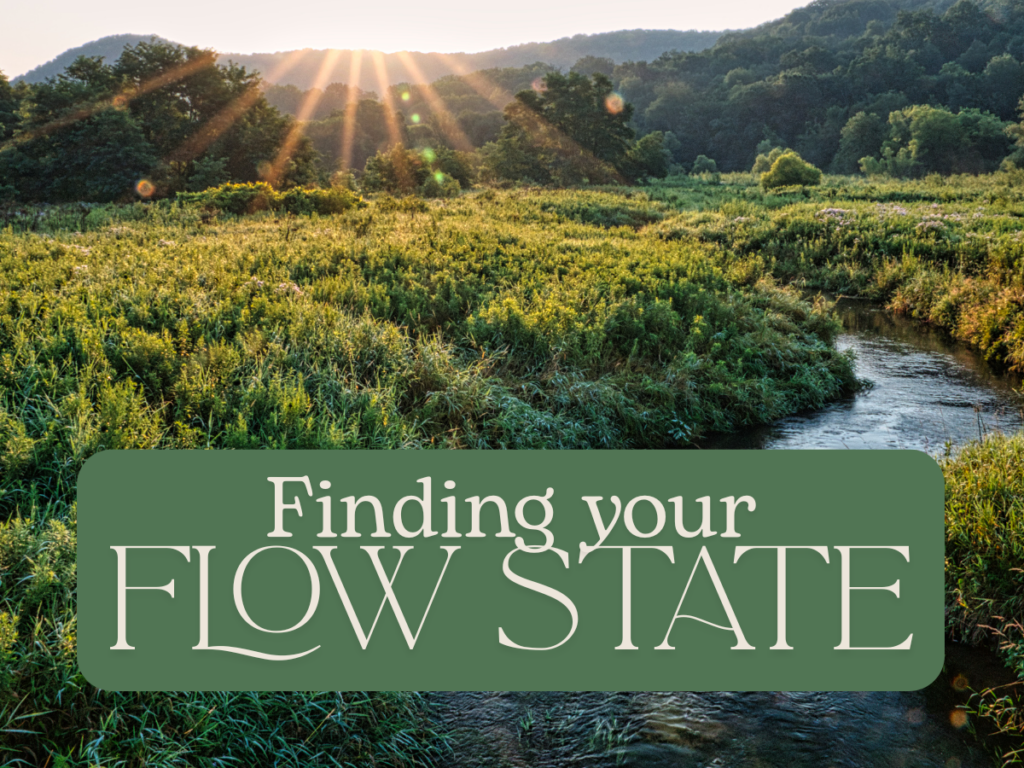
There’s a kind of focus that doesn’t feel forced.
You’re not pushing through resistance or bargaining with your brain. You’re simply with what you’re doing. Time softens. The mental noise fades into the background. Many people describe this as “being in the zone.” In psychology, it’s known as flow state.
At New Leaf, we see flow as more than productivity. It’s often a sign that your nervous system, energy, and internal resources are supported well enough to let you settle into something meaningful.
What is flow state?
Flow was first described by Mihaly Csikszentmihalyi, who noticed that people tend to feel most satisfied not when they’re switched off, but when they’re deeply engaged.
Flow is often characterised by:
Sustained, absorbed focus
Reduced self-criticism and mental chatter
A sense of momentum or ease
Altered perception of time
Feeling present rather than scattered
It’s not relaxation — and it’s not burnout-level busyness either. Flow lives in a middle space where the nervous system is alert, but safe.
A naturopathic lens on Flow State
From a naturopathic perspective, focus doesn’t exist in isolation. Your capacity to concentrate is influenced by:
Nervous system regulation
Blood sugar stability
Sleep and circadian rhythm
Nutrient status
Emotional and cognitive load
When flow appears, it’s often a sign that these foundations are being met well enough in that moment.
When it doesn’t, it’s rarely about laziness or lack of willpower. More often, it’s a sign that something is depleted, overstimulated, or overwhelmed.
Why flow state matters for mental health
Regular experiences of flow are associated with:
Less rumination
Improved mood stability
Greater confidence and self-trust
A sense of competence without pressure
Flow reminds us that focus doesn’t have to hurt — and that being engaged with life can feel steady, even nourishing.
How to find your Flow State
Finding your own version of flow state may seem daunting, but I can guarantee that you already have something where this calm focus happens. Think about something that you enjoy doing, something where your brain is focused on the action or activity. It’s most likely a hobby, or something you enjoy doing.
For Hannah, she finds her Flow State when she’s cooking – following recipes or creating food for her friends. She worked this out after reading about Flow State, and how your brain feels in it.
Others find flow in creating artworks or music. Perhaps they craft – like knitting or pottery. Even videogaming can be considered a great pathway for flow state. Any kind of learning may also help find flow.
To find your flow state – think about the time of day that works best for you, think about activities you enjoy, and practice. Put aside the distractions (people, phones, places) and give yourself some time to enjoy the silence of your brain thinking.
Naturopaths love you to be in flow state, its particularly good for burn out – and also a really important consideration for neurospicy people. Understanding Flow State for ADHD people is also so important.
Reach out if you have more questions. Book an appointment with one of our practitioners to help find your own flow.
Or read more about Flow State for Burnout or Entering your Flow for ADHD.