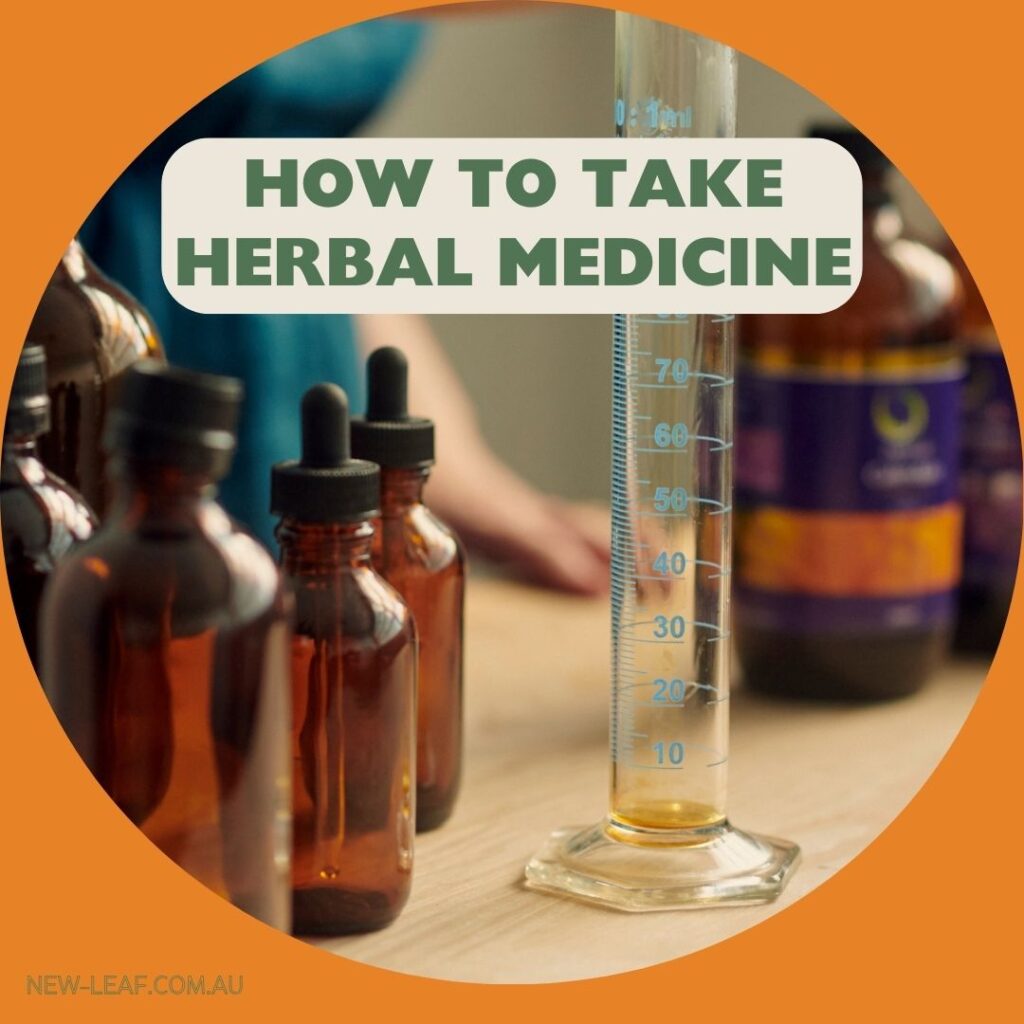
How to Take Liquid Herbal Medicine (and Make It Taste Better)

Written by Hannah Boyd
Naturopath, Herbalist, Nutritionist, BA, Adv Dip Nat, Nut, WHM. MNHAA
“Medicine from the earth tastes like the earth.”
So you’ve been prescribed a liquid herbal medicine, taken your first dose, and pulled a face you didn’t know you could make. You’re not alone. Working out how to take herbal medicine in a way you’ll actually stick to is half the battle, and it’s one of the questions we get asked most.
The good news is that most people get used to the taste within a few days. Once you start noticing a difference, a quick shot twice a day feels like a pretty fair trade. Think of it as a ten-second commitment: pull the face, get it down, get on with your day.
Whether you’re seeing a New Leaf practitioner or another naturopath or herbalist, these tips will help you get your herbs down and keep taking them.
What is liquid herbal medicine?
Liquid herbal medicines, often called tinctures or liquid extracts, are made by soaking plant material in a mix of water and alcohol. This draws out the plant’s active compounds and keeps the medicine stable in the bottle.
Your practitioner usually blends several extracts into one formula made for you. That’s why your bottle probably tastes nothing like anyone else’s, and why the dose is easy to adjust as things change. Naturopaths and herbalists use liquid herbs for a wide range of concerns, from gut health to hormones and perimenopause.
Why does herbal medicine taste so bitter?
Many medicinal plants are naturally bitter, earthy or astringent, and the extraction process concentrates those flavours. That’s partly the point.
For some herbs, the bitterness is the medicine. When bitter compounds reach the taste receptors on your tongue, they prompt your body to produce saliva, stomach acid and bile, which get your digestion ready for food. This is why digestive bitters are traditionally taken a short time before meals. The mechanism is well described, although clinical research on bitters for specific conditions is still fairly limited.
So if your formula was prescribed for digestion, completely disguising the taste may blunt its effect. If you’re not sure why your herbs taste the way they do, ask your practitioner. It’s a good question.
How to take herbal medicine: routine and reminders
The best formula in the world won’t help if it’s living at the back of the pantry.
- Keep it visible. Put your bottle somewhere you’ll see it every day: the kitchen bench, next to the kettle, or on your desk.
- Pair it with a habit you already have, such as brushing your teeth, making breakfast or packing your lunch.
- Set a daily reminder. A phone alarm works, or try a reminder app like Medisafe.
- Shake the bottle before every dose. Some sediment is normal, and plant compounds can settle at the bottom.
- Use the measuring cup or syringe provided so your dose is accurate.
How to make herbal medicine taste better
- Keep the liquid to a minimum. Take your dose with a small amount of water or juice. Fill the measuring cup rather than a whole glass, because one quick shot beats a long, slow glass of bitter.
- Try pear juice. It works surprisingly well with bitter flavours. Orange juice, not so much.
- Make it a tea. Dilute your dose in warm water and sip it. This also reduces the alcohol content, although it doesn’t remove it completely.
- Chill it. Cold herbs are often easier to get down, so try keeping your bottle in the fridge.
- Make a herbal mocktail. Mix your dose with soda or sparkling mineral water.
- Have a chaser ready, whether that’s a sip of juice, a piece of fruit or a quick tooth brush.
- Adjust the timing. If your herbs feel too strong on an empty stomach, taking them with or after food can help. The exception is herbs prescribed before meals for digestion. Check with your practitioner before changing when you take those.
- The smoothie option. It’s controversial, but yes, you can blend your herbs into a smoothie. It might ruin the whole smoothie. Don’t say we didn’t warn you.
“Get it in quickly. One quick hit and it’s done.”
How to make herbal medicine taste better
- Take a few slow breaths before your dose. It really does help if you tend to tense up.
- Focus on why you’re taking it, not what it tastes like.
- Ask about starting small. Some people do better starting with a smaller dose and building up, but always check with your practitioner first.
- Tell your practitioner if you’re struggling. Seriously. Most formulas can be adjusted, and there are often non-liquid alternatives.
Frequently asked questions
Is there alcohol in herbal medicine?
Most liquid herbal medicines contain alcohol because it extracts and preserves the plant compounds. Each dose is small, so the amount of alcohol is small too, but it isn’t zero.
If you avoid alcohol for any reason, tell your practitioner before you start. That includes pregnancy, recovery, cultural or religious reasons, medications, or simple preference. Alcohol-free options include glycerine-based extracts, tablets, capsules, powders and teas.
Can I take herbal medicine with my prescription medication?
Sometimes, but only with professional guidance. Some herbs can change how medications are absorbed or broken down in the body; St John’s wort is a well-known example.
Always tell your naturopath about every medication and supplement you take, and let your GP and pharmacist know about your herbs too. A qualified practitioner will check for interactions before prescribing.
Can I take herbal medicine while pregnant or breastfeeding?
Some herbs are considered safe during pregnancy and breastfeeding, and many are not. Never self-prescribe herbs at these times.
If you find out you’re pregnant while taking a formula, pause your herbs and contact your practitioner before taking any more.
What should I do if I miss a dose?
Take it when you remember, unless it’s nearly time for your next dose. Don’t double up to catch up.
If you’re missing doses regularly, talk to your practitioner about a routine or dosing schedule that suits your day better.
How long does herbal medicine take to work?
It depends on the herbs, the dose and what they’ve been prescribed for. Some people notice changes within days, for example with digestion or sleep. Longer-standing concerns, such as hormonal issues, often take a couple of months or more.
Your practitioner should give you realistic expectations and review your progress along the way.
What should I do if I get side effects?
Stop taking your herbs and contact your practitioner. Mild digestive upset can often be sorted by changing the timing or taking them with food.
If you notice signs of an allergic reaction, such as swelling, a rash or difficulty breathing, seek medical help straight away or call 000.
How should I store my herbs?
Keep the bottle tightly closed in a cool, dark place, or in the fridge if you prefer it cold. Keep your herbs well out of reach of children, because they contain alcohol and concentrated plant medicines.
Can I stop taking my herbs once I feel better?
Check with your practitioner first. Some formulas work best when they’re tapered off, and your practitioner may want to adjust your treatment rather than stop it outright.
I really can't stomach liquid herbs. What are my options?
You’re not stuck. Tablets, capsules, powders, teas and alcohol-free extracts are all possibilities, depending on the herbs you need.
A good practitioner would much rather change the format than have your bottle sit untouched on the bench.
Can I get herbal medicine through a telehealth appointment?
Yes. At New Leaf, all our consultations are online. Your prescribed herbs are dispensed through a practitioner-only dispensary and delivered to your door, anywhere in Australia.
Still can’t face it? Tell us.
Herbal medicine only works if you actually take it. If you’ve tried everything here and your bottle is still sitting untouched on the bench, that’s useful information, not a failure.
Already a New Leaf patient? Send us a message. We can tweak your formula, change the timing or look at other formats so your treatment fits your life.
Working with another practitioner? Have a chat with them. Good naturopaths want to hear this, and there’s almost always a workaround.
Looking for a naturopath who’ll build a plan around you? Book an appointment with us today, and we’ll work out whether telehealth naturopathy is right for you, wherever you are in Australia.